- Top of the Funnel
- Posts
- Most B2B intros suck
Most B2B intros suck
5 screenwriting techniques that fix that 👀

David Broderick
January 15, 2026
In partnership with

“How Much Do You Charge?” 🦗
How much should you charge for a landing page?
What about a blog post?
Ebook?
🫠
Quit guessing and feel confident about your freelance rates.
The MOFU Freelance Rate Calculator tells you how much other freelancers are charging based on the type of work, years of experience, and more. So you can compare your rates with averages from around the world and feel confident about your pricing – once and for all.
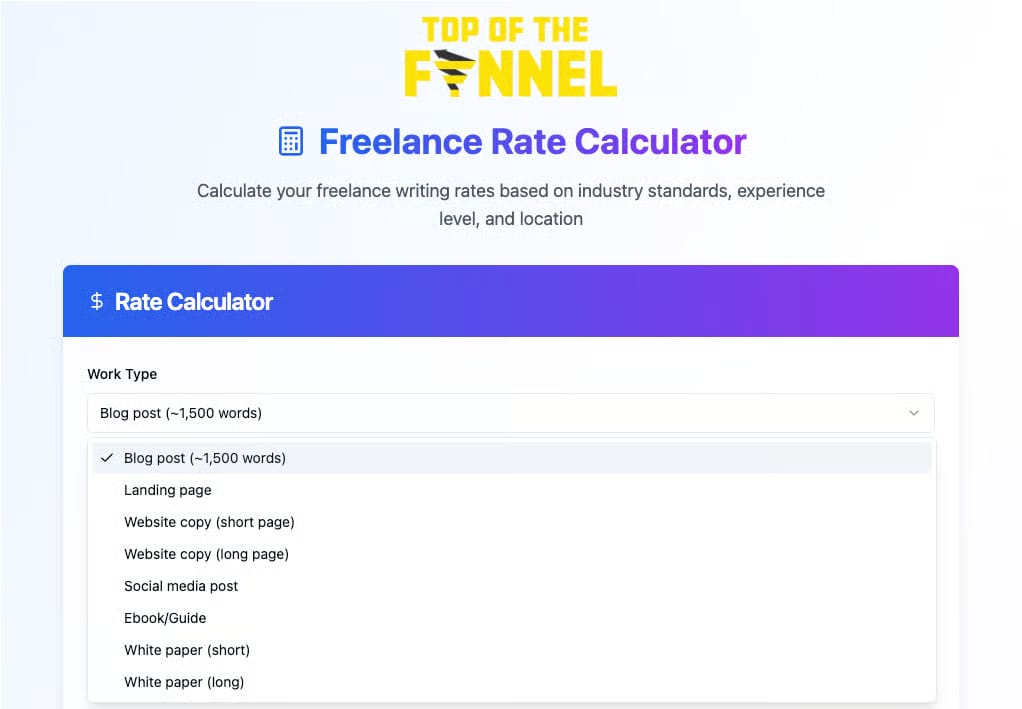
Get access today by becoming a member of MOFU, plus unlock our full library of templates, courses, and workshops that will help you get more work, land better clients, and earn what you’re truly worth.
8 seconds.
That’s how long you’ve got to hook your reader 🎣
(Just 1.7 on social, apparently 💀)
So it doesn’t matter if you’re writing a blog post or a white paper or a cold pitch…
You need to grab folks’ attention immediately.
And the best way to do that?
Think like a screenwriter 🎬
The same techniques filmmakers use to get asses on the edge of seats can leave your readers clinging to your every word, too.
(Yup, even if you’re writing B2B).
Sound too good to be true?
Let Tommy Walker show you how it works.
A little while back, he posted a teardown of an intro from an article by Gong on LinkedIn.
The original intro was great…
But Tommy thought it could be better 👀
So he used five storytelling techniques he learned in his past life as a screenwriter to cook up a new intro that hooks readers even more deeply.
Wanna see how?
Let’s dive right in…
👀 The original intro (and what it does well)
Here’s the original intro from Gong:
All businesspeople get them.
They are usually bad to very bad (to awful).
Often they are automated.
They rarely include any customization or personalization.
Cold emails.
If I had a dollar for every terrible cold email I've received in my business career, well, let's just say I would not be writing this article now.
But cold emails don't have to suck.
They don't have to be deleted or unsubscribed from or marked as spam or replied with THIS IS
SPAM TAKE ME OFF YOUR LIST IMMEDIATELY!
We've rounded up 6 of the most insanely-persuasive, guaranteed-to-rope-you-in, so-good-you'll-want-to-steal-them emails.
Examples that got replies, were shared on social media, and (many of them) ultimately helped book that ever-elusive booked meeting.
Cold emails so good you'll want to steal them. In this case, you can.
Here are 6 of our favorite cold email examples.
Tommy says this is already doing two things that put it head-and-shoulders above your average B2B blog post intro.
The first laying out two competing values.
These lines lay out the battle ground:
Often they are automated.
They rarely include any customization or personalization.
In other words:
🥊 Efficiency vs connection
And that’s the tightrope salespeople walk every day….
The original intro also really clearly sets the stakes by spelling out what’s really at risk for the audience in this sentence:
They don't have to be deleted or unsubscribed from or marked as spam or replied with THIS IS SPAM TAKE ME OFF YOUR LIST IMMEDIATELY!
The subtext? Read on to avoid this pain.
Now let’s be real:
Lay out the competing values and set the stakes in your next intro and it’ll be better than 99% of B2B intros out there.
But Tommy thinks this intro could be working even harder 👀
And he rewrote it to show us how…
💪 Tommy’s punch-up (and why it works better)
Here’s Tommy’s rewrite:
Cold emails.
We all get them-and most of the time, we delete them without a second thought.
They're automated, impersonal, and, frankly, a waste of everyone's time.
Here's the problem: for every bad cold email someone deletes, there's a sales professional behind it who's losing more than just a potential meeting.
They're losing trust, credibility, and even future opportunities.
It doesn't have to be this way.
Imagine writing cold emails so effective, they don't just avoid the spam folder – they get people to reply, to share, to act.
Emails that build connections instead of burning bridges. That's what this article is about.
We've collected six examples of cold emails that don't just stand out – they deliver.
By the end, you'll see exactly what makes them work, and maybe even feel inspired to create your own cold emails worth responding to.
Tommy does a few things here:
First, he spells the competing values out even more explicitly across these two sentences:
They're automated, impersonal, and, frankly, a waste of everyone's time.
…
Emails that build connections instead of burning bridges.
Plus, he not only lays out the stakes:
Here's the problem: for every bad cold email someone deletes, there's a sales professional behind it who's losing more than just a potential meeting.
He also raises them just a little bit more by following that sentence with:
They're losing trust, credibility, and even future opportunities.
This creates even more urgency and intrigue – emotions that are going to get readers to keep scrolling.
Pretty good, right?
But Tommy’s not done
He thinks we can take this up another notch (BAM!) by layering in two more storytelling techniques…
🦸 The final form
We all get them-and most of the time, we delete them without a second thought.
They're automated, impersonal, and, frankly, a waste of everyone's time.
Here's the problem: for every bad cold email someone deletes, there's a sales professional behind it who's losing more than just a potential meeting.
They're losing trust, credibility, and even future opportunities.
Here's the real debate: is the problem with the tool or the person using it?
On one side, some believe cold emails are a necessary evil-the fastest way to scale outreach and generate leads in a busy, competitive world.
On the other, there are those who argue that sales is about building real connections, not bombarding prospects with generic pitches.
Then there's the recipient, weary from years of inbox clutter, questioning if cold emails can ever truly deliver value-or if they're destined to be nothing more than spam in disguise.
And finally, the forward-thinking sales professional sees a middle ground: what if cold emails could be both efficient and meaningful?
It doesn't have to be this way.
Imagine writing cold emails so effective, they don't just avoid the spam folder-they get people to reply, to share, to act.
Emails that build connections instead of burning bridges. That's what this article is about.
We've collected six examples of cold emails that don't just stand out – they deliver.
By the end, you'll see exactly what makes them work, and maybe even feel inspired to create your own cold emails worth responding to.
The first way Tommy ups the ante in this version is by introducing philosophical conflict.
And he does it through this cheeky lil’ line:
Here's the problem: for every bad cold email someone deletes, there's a sales professional behind it who's losing more than just a potential meeting.
They're losing trust, credibility, and even future opportunities.
Here's the real debate: is the problem with the tool or the person using it?
You know the feeling – those moments when you don’t know whether you’re playing the wrong game or you’re playing the game wrong…

(👆me whenever I see a Gen Z in Crocs 🤢)
Tap into debates your readers haven't figured out their stance on yet, and you'll go from having their curiosity to having their undivided attention…
Last but not least, Tommy makes the competing values he’s already laid out work even harder through a screenwriting technique called “four-corner opposition”.
He takes those competing values:
🥊 Automated, impersonal, and a waste of everyone’s time vs builds connections
And lays out the pros and cons of each approach across these four sentences:
On one side, some believe cold emails are a necessary evil – the fastest way to scale outreach and generate leads in a busy, competitive world.
On the other, there are those who argue that sales is about building real connections, not bombarding prospects with generic pitches.
Then there's the recipient, weary from years of inbox clutter, questioning if cold emails can ever truly deliver value – or if they're destined to be nothing more than spam in disguise.
And finally, the forward-thinking sales professional sees a middle ground: what if cold emails could be both efficient and meaningful?
“If we’re able to incorporate these things not just in the introduction but throughout the post, we’re showing that we understand the reader’s world a whole lot more than if we were just to present the information,” says Tommy.
That’s what these techniques are all about, really:
Painting a picture that will leave your ideal reader nodding along saying “yes, someone who finally gets it!”
And at the end of the day, that’s what separates cookie-cutter informational articles (i.e. the stuff AI can write) from content that builds a brand and drives conversions.
So, before you sit down to write your next intro, ask:
What two values are clashing here? (efficiency vs. connection, speed vs. quality, etc.)
What's at stake if my reader gets this wrong? (Be specific)
What debate are they already having with themselves about this?
Am I showing multiple viewpoints before offering the solution?
Nail those four things and your readers won't be going anywhere.
p.s. here’s Tommy’s original LinkedIn post if you wanna check it out :)
 | TOFU Community Manager |
What makes a great ad in 2026?
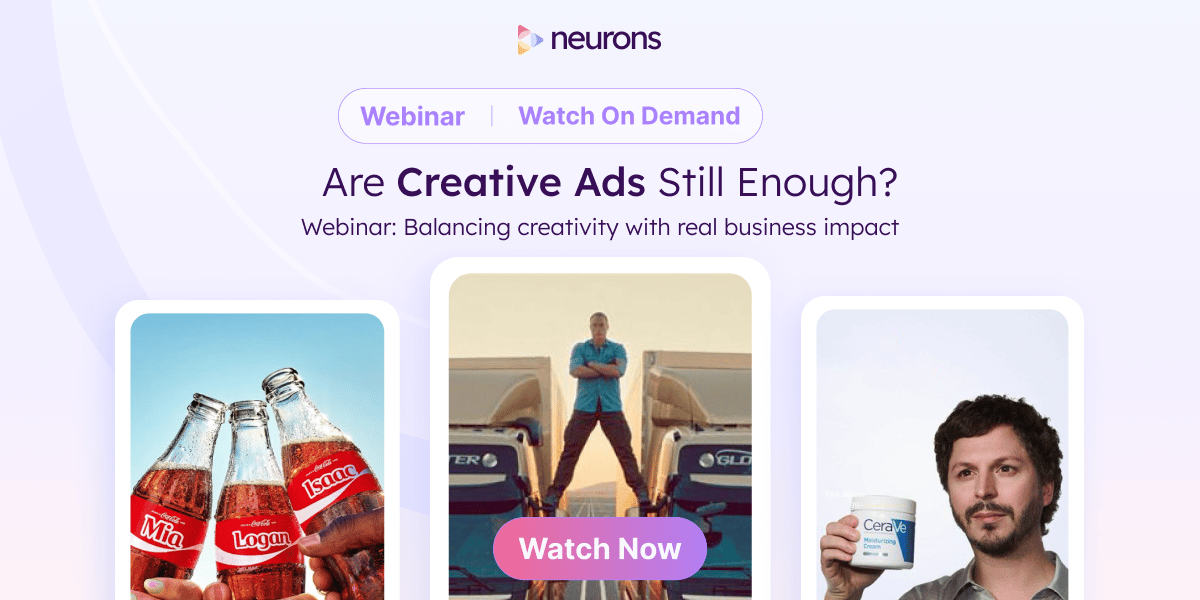
If you want to know the core principles of high-performing advertising in 2026, join our educational webinar with award-winning creative strategist Babak Behrad and Neurons CEO & Founder Thomas Z. Ramsøy.
They’ll show you how standout campaigns capture attention, build memory, and anchor brands. You’ll walk away with clear, practical rules to apply to your next campaign.
You’ll learn how to:
Apply neuroscientific principles to every campaign
Build powerful branding moments into your ads
Make your ads feel relevant to your audience
Master the art of high-impact campaigns in an era of AI-generated noise and declining attention spans